A practical OEM guide for brands developing men's boxer briefs, covering modal pouch fit, waistband customization, fabric testing, print options, MOQ planning, and sample approval.
SEO Publication Metadata
| Suggested slug |
mens-boxer-brief-oem-modal-pouch-waistband-and-custom-print-options |
| SEO title |
Men's Boxer Brief OEM: Modal Pouch, Waistband and Custom Print Options |
| Meta description |
A practical OEM guide for brands developing men's boxer briefs, covering modal pouch fit, waistband customization, fabric testing, print options, MOQ planning, and sample approval. |
| Category |
mens-underwear-oem |
| Publish date |
2026/5/29 |
| Cover image |
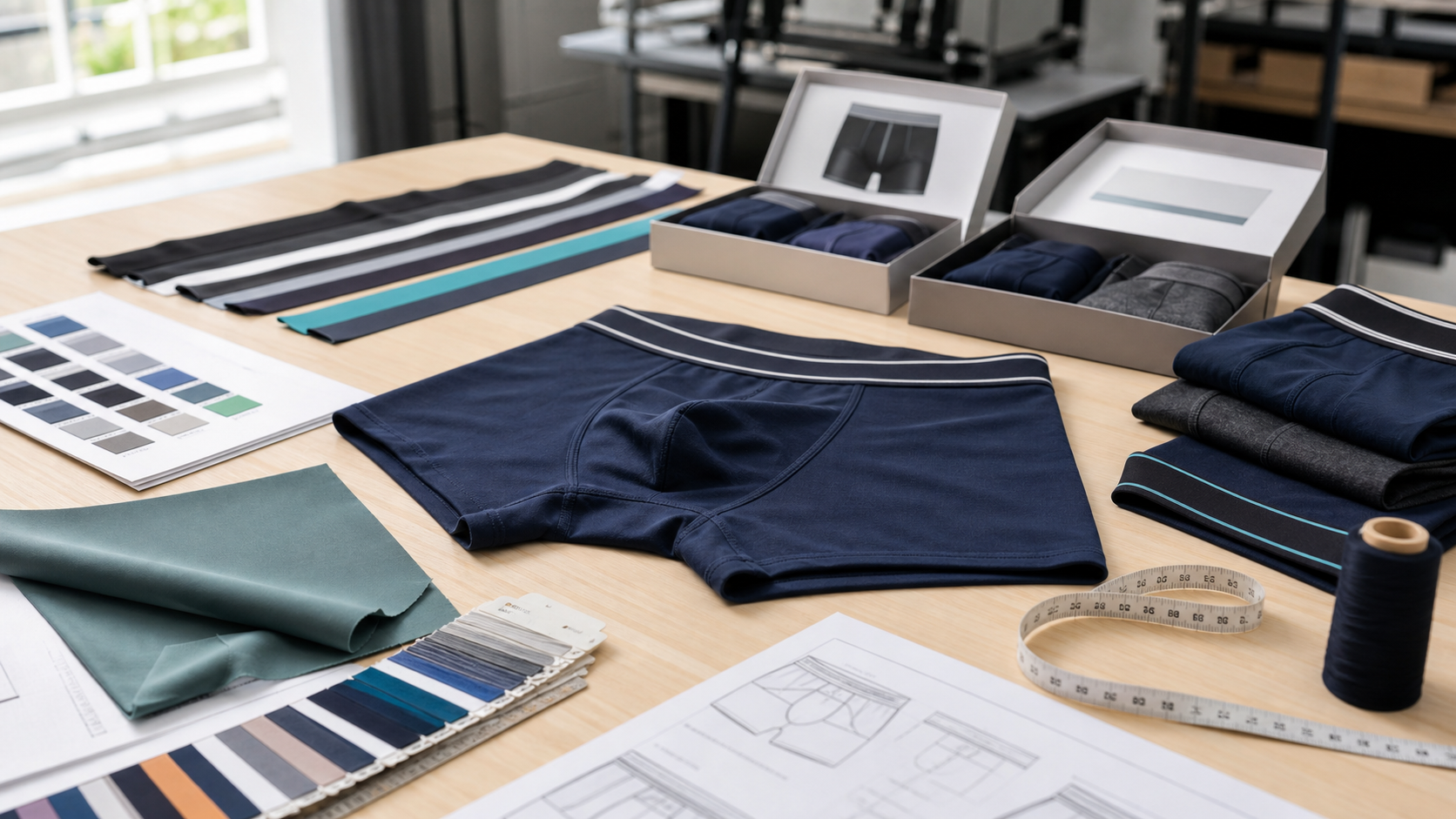
mens-boxer-brief-oem-custom-waistband-cover.png |
| Support image |
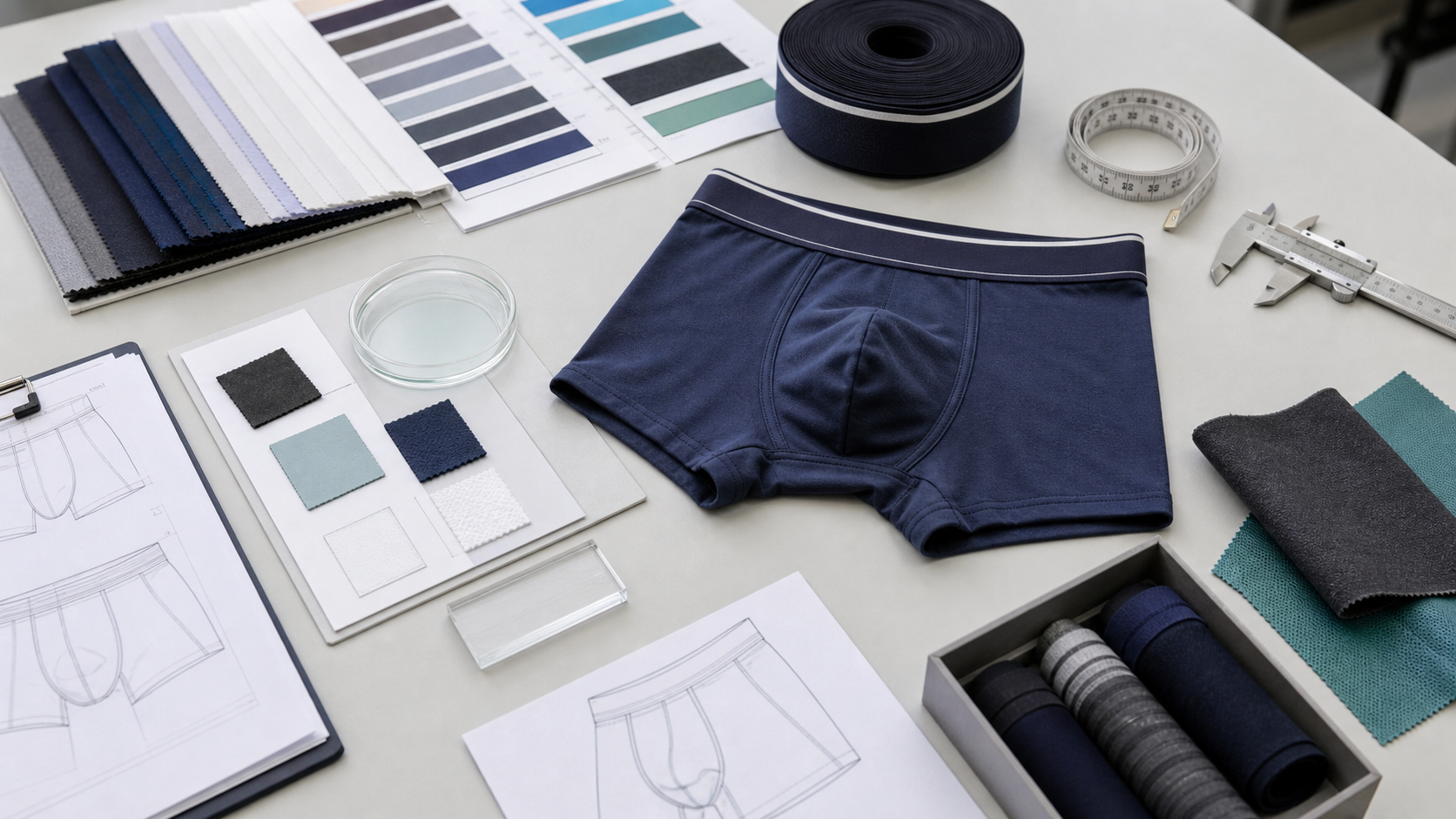
mens-boxer-brief-oem-development-checklist.png |
A men's boxer brief OEM project should not start with color or price alone. Brands should confirm fabric handfeel, pouch structure, waistband quality, logo method, print durability, size grading, and packaging before bulk production. For private label buyers, the best boxer brief supplier is the one that can turn a design idea into a repeatable fit, not just a low quote.
Why men's boxer brief OEM needs technical detail
Men's boxer briefs look simple in product photos, but the buying decision is technical. The buyer is usually trying to create a product that feels soft, holds the pouch shape, stays stable at the leg opening, supports daily wear, and still looks branded enough for retail or online presentation. That result depends on fabric, pattern, waistband, pouch construction, stitching, labeling, and wash performance.
For a startup brand, the risk is approving a sample that looks right but wears poorly. For a retailer or wholesaler, the risk is inconsistency across colors, sizes, or repeat orders. A useful OEM article should explain what buyers need to verify before production.
Fabric and pouch structure come first
Modal blends are often attractive for men's boxer briefs because they can feel soft and smooth against the skin. But the buyer should still check stretch recovery, opacity, shrinkage, colorfastness, and whether the fabric supports the intended pouch shape. A pouch that looks supportive in one fabric may collapse or pull in another fabric.
The buyer should ask for sample comments to be organized around fit checkpoints: front pouch depth, leg opening pressure, waistband tension, back rise, side seam comfort, and movement during sitting and walking. Those checks matter more than a flat-lay photo.
Waistband and custom logo options
The waistband is the most visible branding area on men's boxer briefs. It can use jacquard logo, printed logo, heat transfer, woven label, or a cleaner blank look depending on the brand position. The important question is not only which method looks good. It is whether the waistband remains comfortable, stable, and consistent after washing.
Buyers should confirm waistband width, elasticity, logo clarity, color matching, skin feel, and whether the waistband rolls during wear. If the product is aimed at a premium DTC brand, waistband detail can carry the visual identity. If the product is for wholesale, durability and repeat consistency may matter more.
Print, color and packaging decisions
Custom print options can include waistband branding, all-over body print, placement print, label print, or packaging print. Each option changes cost and development risk. Large body prints need testing for stretch distortion and colorfastness. Dark colors need rubbing checks. Light colors need opacity checks. Packaging should not compress the garment in a way that damages folding or waistband presentation.
DIYASI's visible site structure includes men's underwear, women's underwear, sportswear and seamless products, and eco packaging. That makes men's boxer brief OEM a direct fit for the News section because it connects a real product family to a real sourcing question.
Men's Boxer Brief OEM Development Checklist
| Development point |
What to verify |
Why it matters |
| Fabric |
Handfeel, stretch, opacity, shrinkage and recovery |
Fabric drives comfort, fit and reorder potential. |
| Pouch |
Shape, depth, support and seam comfort |
Pouch comfort is a major review point for men's underwear. |
| Waistband |
Width, logo method, elasticity and roll resistance |
The waistband carries both comfort and branding. |
| Print |
Colorfastness, stretch distortion and placement |
Print problems show quickly after wear and washing. |
| Sizing |
Rise, leg length, size grading and market fit |
US, European and other markets may need different grading logic. |
| Packaging |
Folding, label position, bag or box format |
Packaging affects retail presentation and perceived quality. |
FAQ
What should buyers check first in a men's boxer brief sample?
Check fabric softness, pouch comfort, waistband stability, leg opening pressure, size fit, and wash response before discussing large production.
Can a private label brand customize the waistband?
Yes. Buyers can discuss jacquard logo, printed logo, heat transfer, woven label, color matching, waistband width, and packaging, but the final choice should be confirmed by sample.
Is modal always the best fabric for boxer briefs?
No. Modal can be soft and smooth, but the best choice depends on target customer, price point, stretch requirement, opacity, durability and brand positioning.
What information should a buyer send to start a boxer brief OEM project?
Send target style, reference photos, fabric preference, size range, waistband logo idea, color plan, packaging expectation, quantity estimate and destination market.
Call to action
Ready to develop men's boxer briefs for a private label program? Send DIYASI your target fit, fabric preference, waistband logo plan, size range, packaging idea and estimated quantity to request a sample or quotation.
 ×
×



 EN
EN