 ×
Lace cotton underwear needs a clear map of where each material is used. The cotton body, lace waistband, leg trim and gusset may have different compositions and stretch behavior. A useful buying specification identifies those zones separately so the approved appearance can be reproduced in bulk.
The first decision is whether lace should frame the whole garment or provide a single visual detail. That choice changes the sample review: a waistband must be assessed around the waist, while lace at the leg opening also needs to be reviewed during movement.
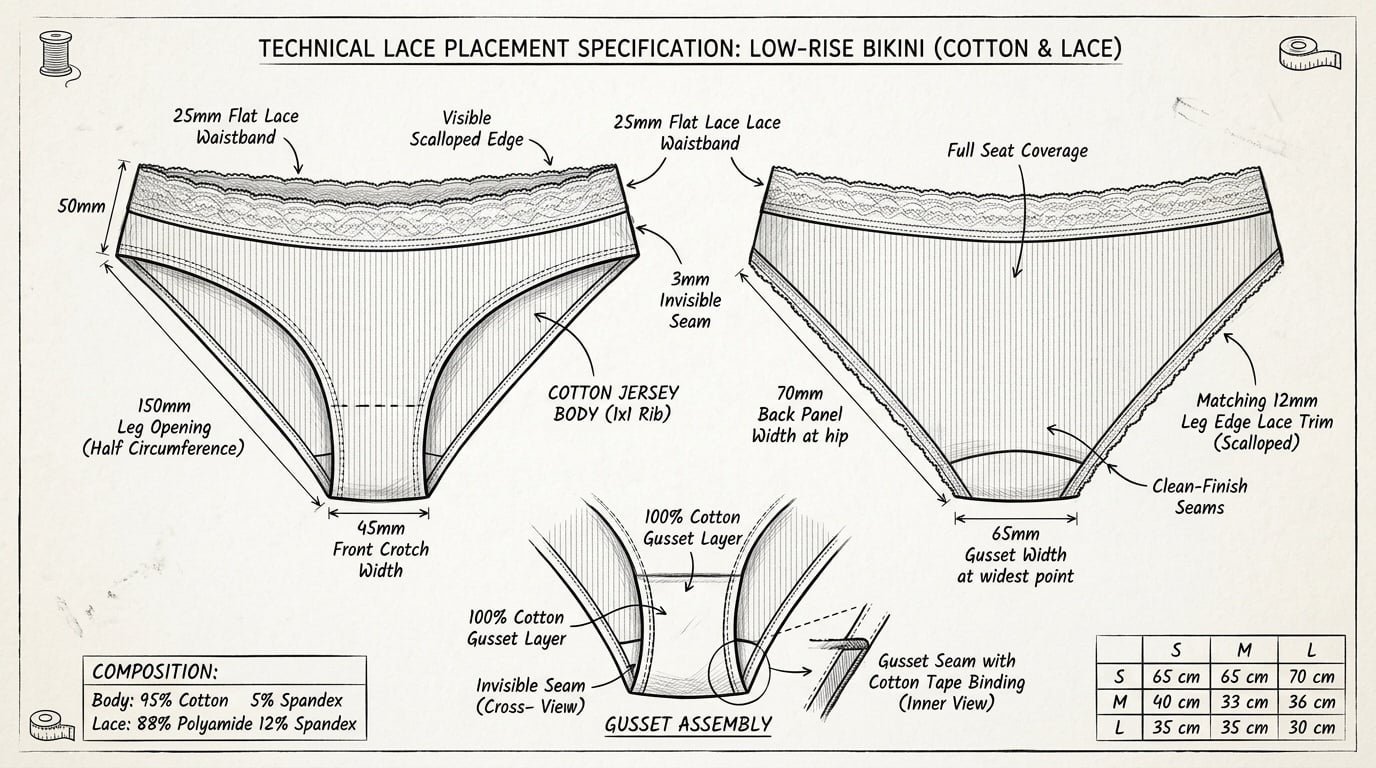
Start with front and back sketches. Shade the body fabric and identify every lace section, including its finished width, attachment line and position on the garment. Indicate which scalloped edge should remain visible.
DIYASI describes LS006 with lace at the waist and leg openings. LS005-142 provides a low V waist reference. These are useful starting points for discussing placement; the final sketch should show the exact treatment requested for the order.
Record whether a measurement describes the incoming lace width or the visible width after assembly. A trim that looks generous on the roll may appear narrower after part of it is sewn into the garment.
The two product tables list a cotton and spandex body separately from polyamide and spandex lace. This distinction matters when describing the finished product. “Cotton body with lace trim” communicates more accurately than suggesting every component is cotton.
Request a component list that includes the gusset and any elastic concealed by the lace. The factory should identify the materials proposed for the sample, and any later substitution should be reviewed against that approved list.
Garment zone |
Information to record |
Sample question |
Main body |
Fabric reference and composition |
Does the body sit smoothly beside the trim |
Waist lace |
Reference width and stretch direction |
Does it stay aligned during sitting |
Leg lace |
Attachment and scallop orientation |
Does the edge move or feel rough |
Gusset |
Material coverage and attachment |
Is the inner finish acceptable |
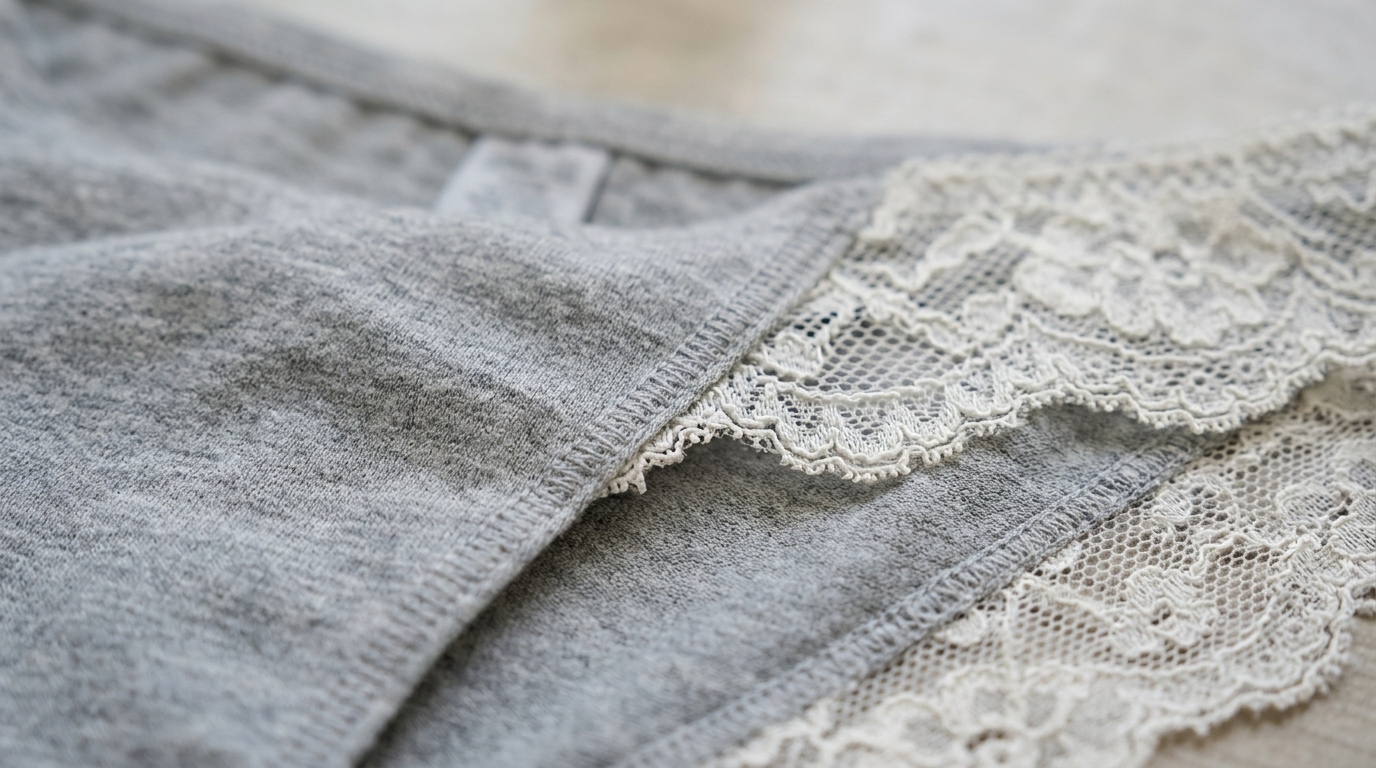
A lace swatch can feel pleasant by itself yet behave differently after it is attached. Inspect the finished join while the garment is relaxed and gently extended. Look for puckering, loose sections, uneven gathers or a seam that feels noticeably firmer than the adjacent fabric.
Coats discusses thread tension and other construction factors in its seam puckering guidance. For a buyer, the practical response is to show the factory the specific affected area and request a reviewed sample. A photograph of puckering does not establish which sewing adjustment will solve it.
Check both sides of the garment. Attractive outer stitching should not conceal rough thread ends or a bulky seam allowance against the wearer. Record the sample version so the corrected construction becomes the reference for the next stage.
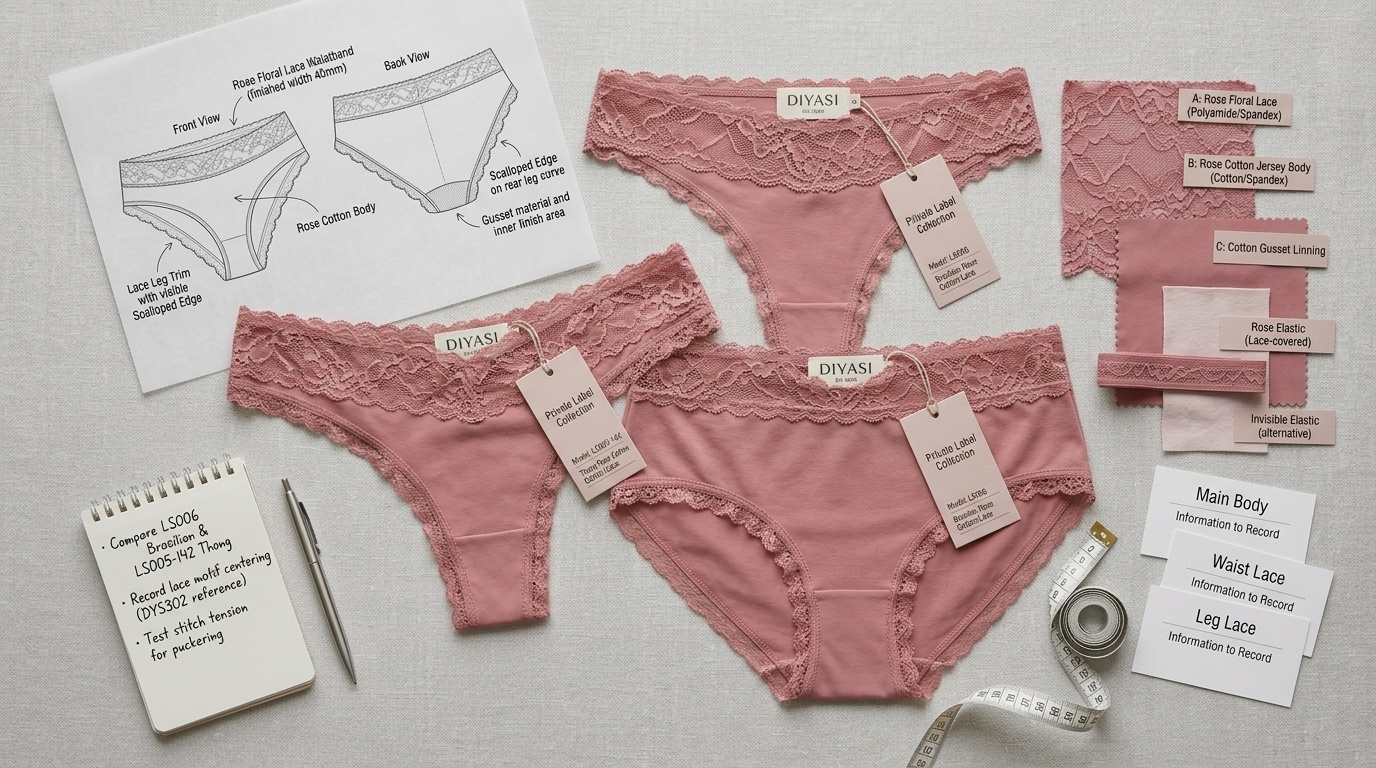
Photograph the front center, back center and matching side sections at the same scale. Decide whether the lace motif must be centered or whether natural placement variation is acceptable. Precise matching may affect cutting arrangements and should be discussed before quoting.
Review the sample again after the agreed care process. Compare the trim with the body for changes in shape, edge flatness and appearance. Keep an unwashed reference so observations are based on a direct comparison.
When contacting DIYASI, share a placement sketch and the chosen lace reference, together with target colors, size range and quantity. Ask for a sample that uses the proposed production materials, and make the approval cover the attached lace rather than the swatch alone.



 EN