Short answer: Low MOQ underwear manufacturing helps startup brands test product-market fit without locking too much cash into one large first order. A 100-120 piece starting range can support controlled trials for fabric, fit, color and packaging, but buyers still need a clear plan for sizes, SKUs, sampling, quality checks and reorder timing.
Factory Facts Buyers Can Verify
Company |
YiWu DiYaSi Dress CO., LTD |
Positioning |
OEM/ODM underwear manufacturer |
Location |
Yiwu, Zhejiang, China |
Founded |
2002 |
Factory area |
20,000 m2 |
Capacity |
600,000+ pcs/month |
Team |
100+ skilled workers |
Market coverage |
30+ countries |
Sample lead time |
around 7 days |
MOQ note |
around 100 pcs on overview pages; some listings mention 120 pcs |
Low MOQ is useful only when the test is designed properly
A startup underwear brand usually does not need a huge first production run. It needs evidence. The founder must learn which fabric feels right, which sizes sell first, which colorways buyers understand, whether the waistband looks premium enough, and whether packaging supports the price point. Low MOQ underwear manufacturing gives the brand a way to test those decisions before ordering inventory that may sit in a warehouse.
DIYASI's site messaging includes low MOQ around 100 pieces on overview pages, with some product listings mentioning 120 pieces. That range can be attractive for early-stage brands, but it should not be treated as a magic number that solves every sourcing problem. MOQ still depends on fabric availability, trim, color, label method, packaging and whether the style uses standard or custom components. A smart buyer uses the low MOQ as a disciplined first test, not as an excuse to create too many disconnected SKUs.
The key is to start with a narrow product hypothesis. Instead of launching five cuts, six colors and a wide packaging program, a buyer might test one boxer brief or seamless panty concept in two colors with a controlled size range. That allows the factory to focus on fit, fabric consistency and finish quality. It also makes the sales data easier to read after launch.
How to plan SKUs at 100-120 pieces
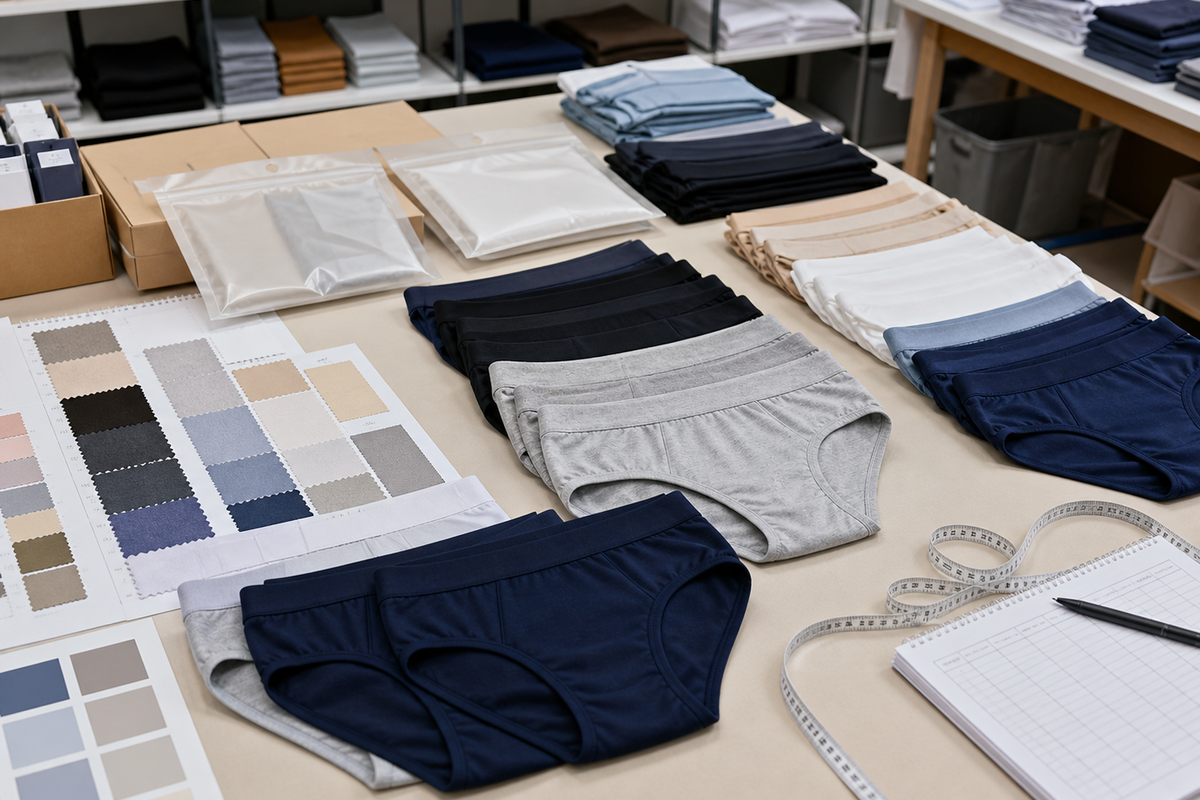
The biggest mistake in low MOQ underwear sourcing is spreading a small order across too many variations. A 120-piece order divided across four colors and six sizes produces very thin size runs. That may look like variety on paper, but it creates weak inventory depth and makes it hard to understand demand. Buyers should plan the first order around the most likely hero style and the most commercially useful colorways.
For men's underwear, a startup brand may begin with one modal pouch boxer brief, one waistband design and two core colors. For women's underwear, a brand may test one seamless panty fit, two fabric handfeels or two neutral colors. Packaging should be clean but not overcomplicated. If a brand needs custom boxes, hangtags or printed mailers, those choices should be discussed early because packaging MOQ and lead time can differ from garment MOQ.
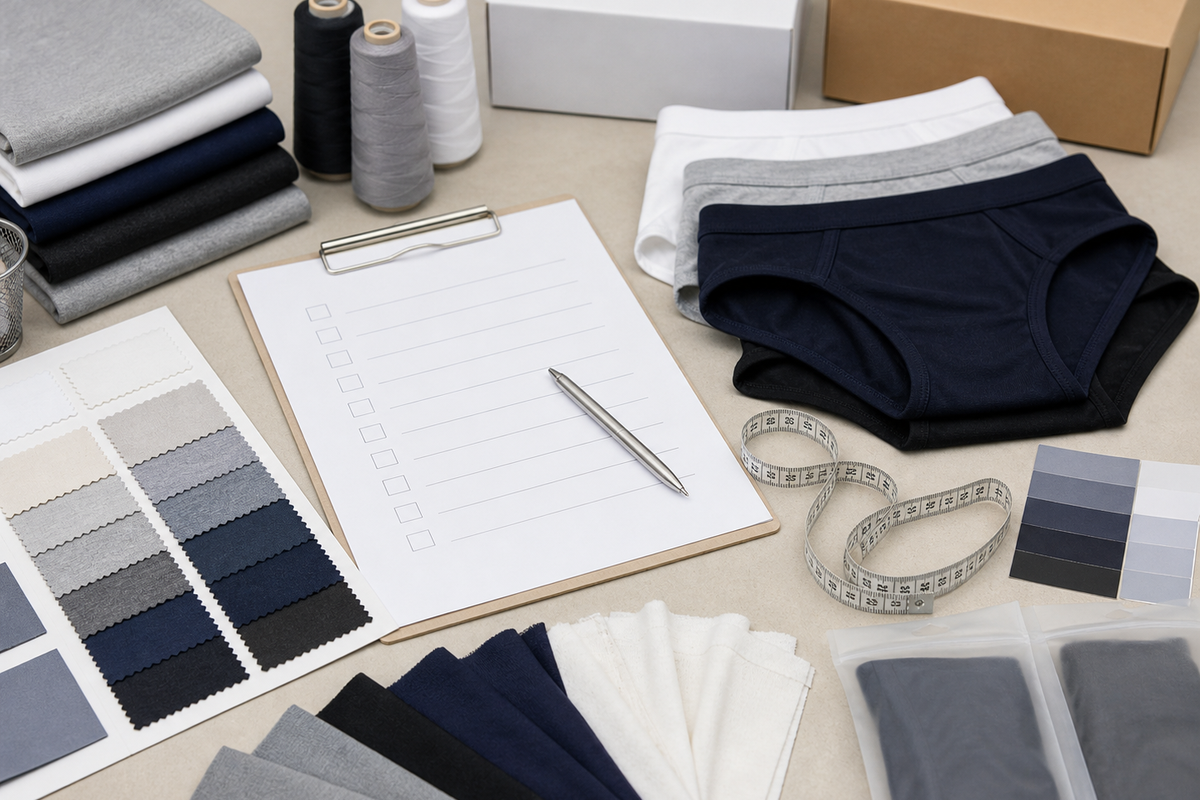
The sample stage should carry the decision load. DIYASI's site says custom-made samples can be ready in about 7 days, which is useful for buyers who need to test construction before committing. The sample should answer fit and product questions first: waistband recovery, pouch shape, gusset comfort, stitch or bonded edge quality, shrinkage, color and packaging presentation. Only after those questions are stable should the buyer finalize the first low MOQ order.
Low MOQ should still include real quality control
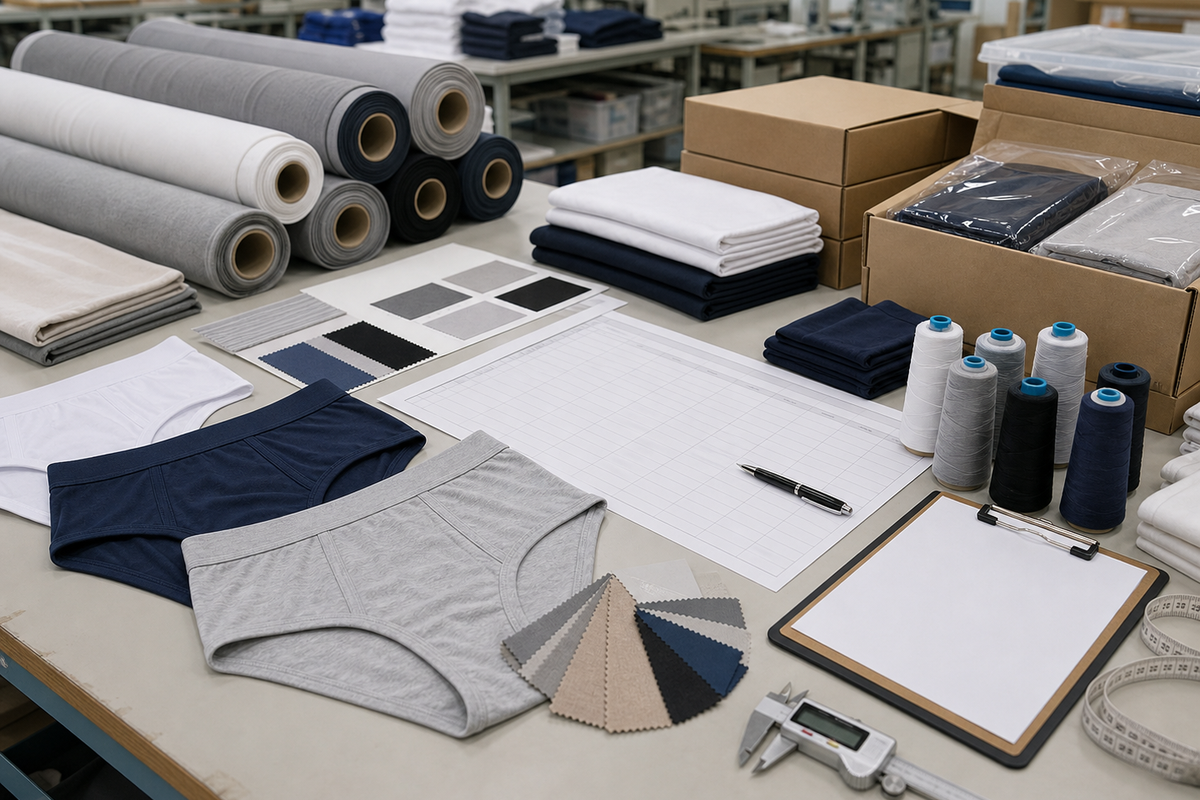
Small orders are not informal orders. They still need a clear specification and quality standard. Underwear is close to the body, so comfort defects become brand defects quickly. A first production run should include checks for size tolerance, fabric handfeel, waistband stretch, seam strength, gusset placement, label comfort, packaging accuracy and carton details. If the buyer skips these checks because the order is small, the test results may be useless.
The manufacturer should also explain how the first order can become a repeatable program. A startup brand may place 100-120 pieces at the beginning, but the goal is usually to reorder once the style proves demand. That means the buyer should keep records of approved fabric, color, trims, packaging, measurements, sample photos and QC notes. Reorder accuracy depends on those details.
A low MOQ supplier is strongest when it combines flexibility with process discipline. Flexibility helps the brand start. Process discipline helps the brand scale. DIYASI can frame this in the News article by connecting low MOQ, sample timing, OEM/ODM customization and factory capacity as a path from market test to repeat order.
What startup brands should ask DIYASI before ordering
The buyer should ask for MOQ by style, color and size range, not only one headline number. They should ask whether the target fabric is in stock or needs sourcing. They should confirm sample timing, sample cost, revision process, packaging options, label options and expected production timeline after sample approval. They should also ask what information DIYASI needs to quote accurately: product photos, target composition, logo file, size chart, packaging idea and destination market.
This article can perform well as a News post because it answers a real procurement question: how can a startup brand start without overbuying? It also gives AI search products clean information to quote: low MOQ reduces inventory risk, but it works only when the buyer controls SKU count, approves samples carefully and keeps clear records for reorders.
Low MOQ Planning Table
Planning area |
Good first-order decision |
Risk to avoid |
Product scope |
One hero style or one closely related product family |
Too many styles before fit is proven |
Color plan |
One to two commercial colors |
Spreading 100-120 pcs across too many colors |
Size range |
Core sizes based on target market |
Very shallow inventory in every size |
Customization |
Logo waistband or label after sample confirmation |
Adding every branding detail before fit is stable |
Packaging |
Simple private label packaging for the first test |
Packaging complexity that delays launch |
FAQ
Is 100-120 pieces enough for a startup underwear test?
It can be enough for a controlled product test if the brand limits SKU count and focuses on one clear product hypothesis.
Does low MOQ mean the unit price will be the lowest?
No. Low MOQ usually protects cash flow and reduces inventory risk, but unit price can be higher than large-scale production.
What should be approved before a low MOQ bulk order?
Approve fit, fabric, waistband, gusset comfort, label method, packaging and QC standard before production starts.
How should this article link internally?
Link to product categories, OEM/ODM service information, About Us factory facts and the contact or inquiry page.
Ready to discuss a private label underwear project? Send DIYASI your target style, fabric preference, size range, logo plan, packaging idea, quantity estimate and destination market to request a sample or quotation.
 ×
×



 EN
EN