


 EN
EN


Launching a men's underwear line is one of the most rewarding product ventures in apparel, but it demands a clear and deliberate approach from concept to shelf. At the center of any successful men's underwear collection are two iconic silhouettes — boxers, boxer brief styles — each serving distinct customer needs, body types, and lifestyle preferences. Whether you are building a private label brand, developing an athletic collection, or entering the everyday basics market, understanding how to design, source, and differentiate these two styles is the foundation of your entire product strategy.
Building a men's underwear line around boxers, boxer brief silhouettes requires you to make informed decisions at every stage — from fabric selection and construction details to branding, sizing, and wholesale sourcing. This guide walks through the complete process, giving you a practical, professional framework so that your collection enters the market with both commercial appeal and genuine product integrity. The insights here are tailored specifically for brand founders, product developers, and buyers who are serious about creating a lasting underwear label.
Understanding the Core Silhouettes: Boxers vs. Boxer Briefs
The Functional Identity of Each Style
Before you can build a cohesive men's underwear line, you need a sharp understanding of what makes boxers, boxer brief styles fundamentally different from each other. Traditional boxers are loose-fitting, woven shorts that offer maximum airflow and a relaxed drape. They appeal to consumers who prioritize comfort over support and are a staple in casual and loungewear-adjacent underwear segments.
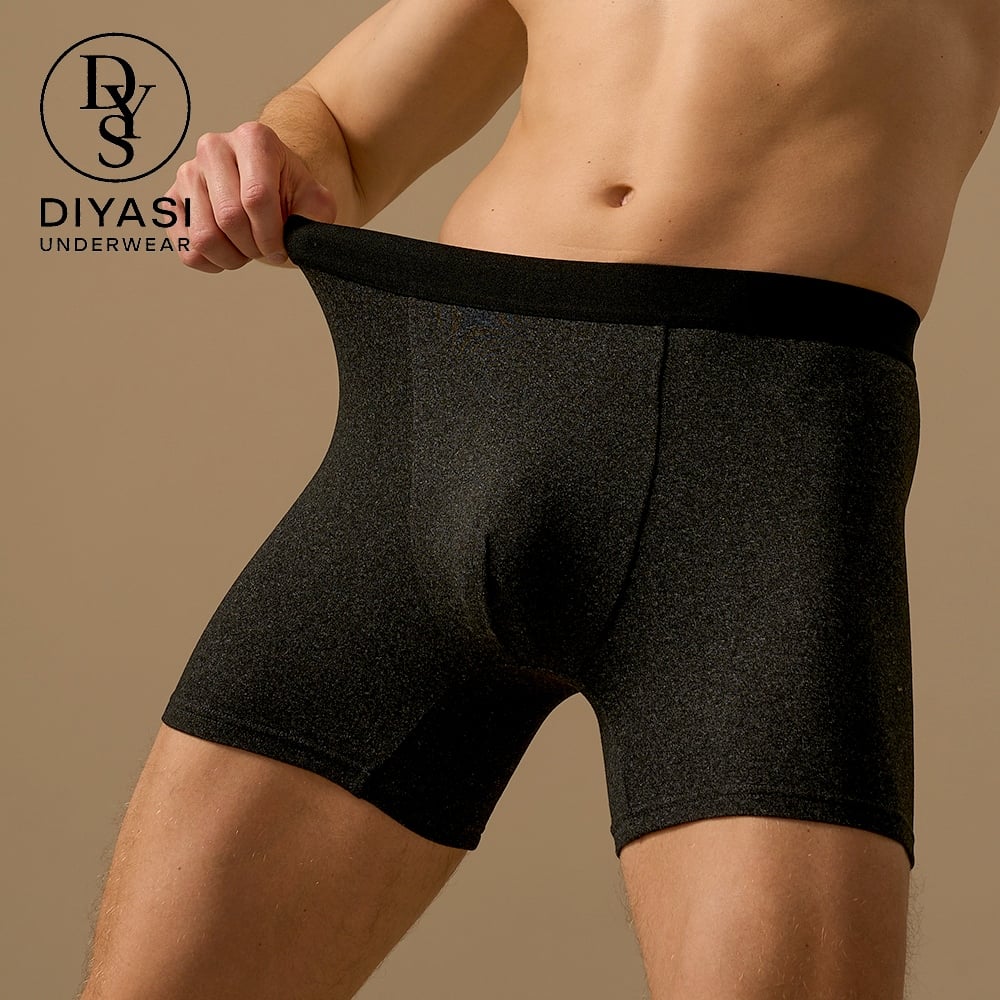
The boxer brief, by contrast, is a fitted hybrid that combines the longer leg of a boxer with the snug, supportive structure of a brief. Made from stretch fabrics like cotton-spandex blends or recycled polyester, the boxer brief has become the dominant style in premium and performance underwear lines. Its form-fitting silhouette provides muscle support, prevents thigh chafing, and maintains a clean profile under fitted clothing.
Knowing this distinction shapes every product decision downstream. A brand that positions itself in the athletic or performance space will naturally lean toward the boxer brief as its hero product, while a brand targeting relaxed lifestyle wear may make woven boxers the primary focus. Most commercially successful underwear lines carry both, offering customers a range that covers different contexts of wear.
Consumer Behavior Across the Two Styles
Consumer data consistently shows that men often own and wear both boxers, boxer brief styles simultaneously, rotating between them based on occasion, activity level, and season. Active men who cycle, run, or work out tend to reach for a boxer brief during the day, while switching to a looser boxer style in the evening or on rest days. This behavioral insight is valuable when planning your SKU range.
For a new underwear brand, this dual-style preference is an opportunity rather than a complication. By offering well-designed boxers, boxer brief options within the same collection, you increase your average order value and give buyers a reason to purchase more than a single style per transaction. When both silhouettes share consistent branding elements — the same waistband label, color palette, and fabric family — they elevate each other and create a cohesive line identity.
Fabric Selection and Construction for a Professional Finish
Choosing the Right Materials for Boxers
Woven boxers are traditionally made from cotton poplin, cotton flannel, or cotton-polyester blends. The weave structure gives them their characteristic drape and breathability. When developing your boxer program, the weight and thread count of the woven fabric will directly affect how the garment hangs, how it launders, and how long it retains its pattern clarity. A mid-weight cotton poplin is the standard for most commercial boxers because it balances softness, durability, and printability.
If you are developing a fashion-forward boxer line, premium cotton or yarn-dyed check fabrics can elevate perceived value significantly. Print-on-demand woven boxers with novelty graphics have a strong gift market, while solid or simple pattern boxers in supima cotton can command premium pricing in the lifestyle segment. Your fabric choice should always reflect your brand positioning and target price point.
Engineering the Ideal Boxer Brief Fabric
The boxer brief demands a knit fabric with stretch, recovery, and moisture management properties. The most widely used base fabric is cotton-modal or cotton-spandex, offering softness against skin alongside the stretch necessary for unrestricted movement. However, sustainable performance collections are increasingly turning to recycled polyester as the primary fiber, which delivers excellent moisture-wicking performance, durability, and a lower environmental footprint.
A factory-direct option such as the boxers, boxer brief styles made from recycled polyester offers brands the dual benefit of sustainability credentials and high-performance attributes. Recycled polyester boxer briefs with a 5-inch inseam are particularly popular because they provide thigh coverage that reduces chafing without adding bulk under pants. When specifying your boxer brief fabric, also consider weight (gsm), four-way stretch percentage, and colorfastness ratings — all of which affect both the feel of the product and the consistency of your dye lots across production runs.
The gusset construction in a boxer brief deserves special attention. A reinforced or double-layered gusset improves durability and comfort in the area of highest friction. Similarly, flatlock seaming along the inseam and waistband edges prevents irritation and gives the finished garment a clean, athletic aesthetic. These construction details are often what separate a commodity boxer brief from a premium one in the eyes of your customer.
Design, Branding, and Customization Across Your Line
Building a Consistent Visual Identity
A men's underwear line built on boxers, boxer brief styles needs a coherent visual language to present as a professional brand rather than a collection of random products. This begins with your waistband. The elastic waistband is the most visible branding element on any pair of underwear and carries your brand name, logo, and often your colorway identity. Jacquard-woven waistbands with embedded brand names are the standard for premium labels, while printed or heat-transfer waistbands suit mid-tier lines with tighter development budgets.
Color and pattern play a major role in how your boxers, boxer brief collection reads to buyers. Most underwear lines lead with core solid colorways — navy, black, grey, white — and then layer in seasonal prints or fashion colors for variety. For your woven boxers, plaid and check patterns are perennial bestsellers. For your boxer brief program, solid colors with tonal or contrast waistbands carry the highest commercial appeal across age groups.
Private Label and Custom Development Options
One of the most important decisions you will make when building your underwear line is whether to develop fully custom silhouettes or work from a manufacturer's existing base patterns. Custom development gives you unique fit and construction ownership, but it requires a higher minimum order quantity and a longer development timeline. For most emerging brands, starting with a manufacturer's refined base pattern for both boxers and boxer briefs and then customizing the waistband, color, label, and packaging is the most efficient path to market.
Private label programs from specialized underwear manufacturers allow you to add your branding to quality-tested boxer brief and boxer styles with minimal upfront tooling costs. This approach is particularly effective for direct-to-consumer brands that need to control their visual identity but cannot yet support the volume required for full custom development. As your brand grows and your data on preferred fits solidifies, you can invest in custom pattern development for your best-performing silhouettes.
Sizing, Fit Architecture, and Size Range Strategy
Establishing a Fit Philosophy for Your Brand
Fit is the single most influential factor in whether a man repurchases your boxer brief or boxer style. Unlike outerwear, where slight fit variations are acceptable, underwear sits directly against the skin, meaning any discomfort — a tight waistband, a riding leg hem, a loose pouch — creates an immediate and lasting negative impression. Your fit philosophy should be clearly defined before you produce any samples.
For boxer briefs, the critical fit points are the waistband circumference and recovery, the pouch shaping (contour vs. flat front), the inseam length, and the thigh opening. A 5-inch inseam is widely regarded as the most versatile length for everyday wear, providing adequate coverage without restricting movement. For woven boxers, the key fit points are the seat room, the fly construction (open vs. button fly), and the overall leg opening width.
Planning Your Size Range for Commercial Viability
A commercially viable men's underwear line typically spans sizes small through 3XL or 4XL, depending on your target market. Launching with a core range of S through XXL is practical for most emerging brands, covering the majority of the male population while keeping initial inventory investment manageable. As your sales data accumulates, you can make informed decisions about extending your size range into extended sizing.
One consideration unique to boxers, boxer brief lines is that the sizing conventions can vary by market. US sizing uses waist measurements in inches (28-30, 30-32, etc.), while European sizing often uses letter designations (S, M, L, XL). If you are building for international distribution, your size chart and labeling should clearly communicate both systems to avoid returns and customer dissatisfaction. Accurate sizing pays dividends in lower return rates and higher customer lifetime value.
Sourcing, Production, and Scaling Your Underwear Line
Selecting the Right Manufacturing Partner
The quality, consistency, and scalability of your boxers, boxer brief line is directly tied to the manufacturing partner you choose. For underwear specifically, you want a factory with deep expertise in knit and woven intimate apparel, strong quality control systems, and transparent communication on minimums, lead times, and compliance documentation. Factories that specialize exclusively in men's underwear — rather than general apparel manufacturers — typically produce superior results because their machinery, workers, and processes are optimized for these specific garment types.
When evaluating potential factories for your boxer brief and boxer program, request fabric test reports, fit sample history, and references from existing brand clients. Ask about their capacity for custom waistbands, their dyeing and finishing capabilities, and their experience with sustainable materials like organic cotton or recycled polyester. A factory that can grow with you — increasing volume as your brand scales — is far more valuable than one that simply offers the lowest initial price per unit.
Wholesale Pricing, Margins, and Launch Economics
Building a profitable men's underwear line requires a disciplined approach to cost engineering from the very first development stage. Your target retail price should be established before you finalize fabric specifications, so that every material and construction decision is evaluated against its contribution to your margin. For boxer brief styles in the premium segment, a retail price of $20–$35 per unit is standard, while mid-tier boxer brief and boxer styles typically retail between $10 and $20.
Wholesale pricing for your boxers, boxer brief line to retailers should maintain a keystone markup (50% margin), meaning your wholesale price should be approximately half the intended retail price. This leaves room for retailer margin while still allowing you to cover your cost of goods and contribute to your brand's operating expenses. Direct-to-consumer channels offer higher margins and should be the primary focus for early-stage brands, with wholesale introduced once your product-market fit is proven and your production volumes support better unit economics.
FAQ
What is the minimum order quantity typically required to start a private label boxers, boxer brief line?
Minimum order quantities vary by manufacturer, but most specialized underwear factories require between 300 and 1,000 units per style per colorway for private label programs. Some manufacturers offer lower minimums for brands in early development stages, especially when working from existing base patterns rather than fully custom silhouettes. Discussing your growth roadmap with potential suppliers upfront helps identify the most flexible and scalable partnership options for your boxer brief and boxer program.
How do I decide whether to prioritize boxers or boxer briefs when launching a new men's underwear brand?
The decision should be driven by your target customer and brand positioning. If you are entering the performance or athletic space, the boxer brief should be your hero product because it is the preferred style for active men. If your brand is lifestyle-focused or gift-oriented, woven boxers may generate stronger initial traction. For most modern underwear brands, launching with a boxer brief as the lead style and a woven boxer as a complementary offer gives you broad market coverage from day one.
What fabric is most recommended for a sustainable boxer brief collection?
Recycled polyester is increasingly the recommended fiber for sustainable boxer brief collections because it delivers strong moisture-wicking performance, exceptional durability, and a measurably lower carbon footprint compared to virgin polyester. Organic cotton is the preferred choice for brands emphasizing natural softness and breathability. Many premium brands now offer hybrid constructions combining organic cotton with a percentage of recycled spandex, giving the boxer brief both natural comfort and sustainable stretch performance.
How important is the waistband in differentiating a premium boxers, boxer brief line?
The waistband is critically important — it is the first visible element of the garment and carries the brand's identity. A premium jacquard-woven waistband with the brand name embedded in the elastic communicates quality and intentionality at a glance. For both boxers and boxer brief styles, the waistband width, elastic recovery, and print or weave quality should be treated as a non-negotiable investment, not an area to cut costs. Customers who love the feel of a boxer brief waistband are far more likely to become loyal repeat buyers of your entire underwear line.
Table of Contents
- Understanding the Core Silhouettes: Boxers vs. Boxer Briefs
- Fabric Selection and Construction for a Professional Finish
- Design, Branding, and Customization Across Your Line
- Sizing, Fit Architecture, and Size Range Strategy
- Sourcing, Production, and Scaling Your Underwear Line
-
FAQ
- What is the minimum order quantity typically required to start a private label boxers, boxer brief line?
- How do I decide whether to prioritize boxers or boxer briefs when launching a new men's underwear brand?
- What fabric is most recommended for a sustainable boxer brief collection?
- How important is the waistband in differentiating a premium boxers, boxer brief line?