


 EN
EN



For men's underwear brands entering or scaling within the competitive intimate apparel market, understanding the full manufacturing process behind a high-quality boxer brief is not optional — it is foundational. Every decision made during production, from fabric selection to pattern engineering, directly determines how the final garment performs, how it is received by consumers, and how it positions your brand in a crowded marketplace. Getting the manufacturing details right means fewer returns, stronger reviews, and a loyal customer base that keeps coming back.
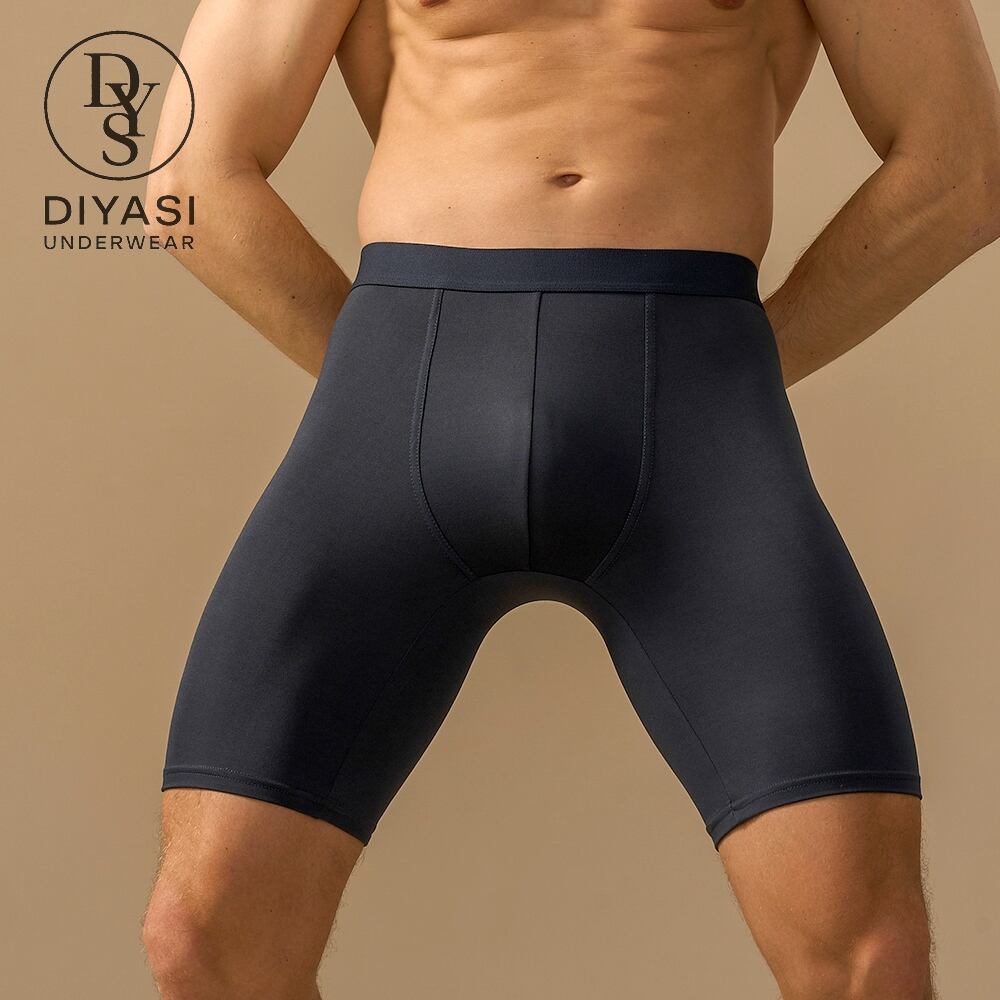
This guide is designed specifically for men's underwear brand owners, product developers, and sourcing managers who want a clear, practical framework for manufacturing the boxer brief at a professional level. Whether you are working with an OEM factory, developing your own production line, or renegotiating with an existing supplier, this guide covers the critical stages and decision points that separate average products from exceptional ones.
Fabric Selection and Material Specifications
Choosing the Right Base Fabric for a Boxer Brief
The choice of fabric is the single most impactful manufacturing decision when producing a boxer brief. The fabric must balance stretch, recovery, breathability, moisture management, and durability — all while remaining soft against sensitive skin. The most commonly used base fabrics in professional boxer brief manufacturing are cotton-modal blends, microfiber polyester, nylon-spandex blends, and bamboo-derived fabrics.
Cotton-modal blends remain the industry standard for everyday boxer brief production due to their natural softness and excellent color retention. Modal, derived from beech tree pulp, gives the fabric a silkier hand feel than standard cotton alone while improving moisture-wicking capability. For brands targeting a premium positioning, this blend delivers the comfort expectation consumers associate with quality underwear.
Performance-oriented boxer brief lines benefit from nylon-spandex or polyester-spandex constructions, which offer superior stretch recovery and moisture transport. These fabrics are lighter in weight and retain their shape through repeated washing better than natural fiber blends. However, they require precise dyeing and finishing processes to avoid pilling or a plasticky hand feel that can undermine the premium perception of your brand.
Spandex Ratio and Stretch Recovery Standards
Every boxer brief design depends on a spandex or elastane component to provide the necessary stretch and recovery that keeps the garment fitting correctly over time. Industry-standard spandex content for a boxer brief ranges between 5% and 15%, depending on the intended use and overall fabric construction. A lower spandex ratio around 5–8% is appropriate for relaxed-fit everyday styles, while athletic or compression-style boxer brief designs may use up to 15%.
Stretch recovery testing is a mandatory quality checkpoint in boxer brief manufacturing. Fabrics should be tested for both two-way and four-way stretch performance under standardized tensile testing protocols. A boxer brief that loses elasticity after 20 wash cycles will generate negative reviews and returns — stretch recovery benchmarks must be established early and communicated clearly to your fabric supplier or mill.
Brands should also specify elongation-at-break values and recovery percentages in their fabric technical sheets. These specifications become binding contractual parameters when working with OEM or ODM factories. Without them, fabric substitution mid-production is a common risk that can silently degrade the quality of your boxer brief without triggering an obvious quality alert.
Pattern Engineering and Fit Architecture
The Role of Pattern Grading in Boxer Brief Fit
A well-fitted boxer brief is engineered at the pattern level long before fabric is cut. Pattern grading — the process of scaling a base pattern up or down across a size range — must be performed with anatomical accuracy to ensure that each size in your range fits proportionally and comfortably. Poor grading creates inconsistent fit across your size range even when the base size is perfectly developed.
The waistband, thigh opening, and inseam length are the three critical measurement zones that require the most attention during boxer brief pattern grading. The waistband must scale with both the hip circumference and the natural waist, as different body types carry weight differently across these zones. Many brands make the mistake of grading the waistband linearly when it should follow a curved arc to accommodate anatomical variation across sizes.
Inseam length is also a nuanced grading decision for a boxer brief, particularly for long-leg styles. Consumers expect inseam length to scale somewhat with size, but over-scaling creates a product that looks proportionally incorrect on taller men within the same size bracket. Developing separate 'regular' and 'tall' grading blocks is a strategic investment that signals commitment to inclusive fit and reduces the most common boxer brief fit complaints.
3D Pouch Construction and Its Manufacturing Implications
The front pouch is the most technically demanding component in boxer brief manufacturing. A flat-front construction is simpler to produce but delivers inferior comfort and support compared to a contoured or 3D pouch design. The 3D pouch uses additional panel pieces and curved seaming to create forward projection and separation, which significantly reduces fabric bunching and discomfort during active movement.
From a manufacturing standpoint, 3D pouch panels require more precise cutting and assembly than flat-front construction. The curved seams must be stitched with consistent tension and alignment, and factories need operators experienced in working with stretch fabrics along curved paths. Brands specifying 3D pouch construction on their boxer brief should include detailed stitch tolerance specifications in their technical packages and request first-article inspection samples before approving mass production.
The lining fabric used inside the front pouch is another specification decision with real functional implications. A separate moisture-wicking mesh liner adds comfort in humid conditions and provides an additional layer of support. However, it also adds material cost and one additional assembly step, which affects unit economics. Brands should weigh the consumer experience benefit of a lined boxer brief pouch against the cost impact on their target retail price point.
Waistband Development and Anti-Chafing Design
Selecting Waistband Construction Methods
The waistband is one of the most visible branding and comfort elements of any boxer brief. It must perform two functions simultaneously: maintaining secure hold around the waist without rolling or slipping, and doing so without causing pressure marks, irritation, or restriction. The construction method chosen during manufacturing has a direct bearing on whether the waistband achieves both objectives consistently.
Jacquard woven waistbands remain the most popular option in premium boxer brief production because they allow for high-definition logo and brand name integration while delivering consistent elasticity. The elastic core of a jacquard waistband is typically latex-free and rated for a specific elongation force, which determines how firmly it grips the waist. Specifying the elongation force — usually measured in Newtons — in your technical package prevents factories from substituting lower-grade elastic that will underperform in daily wear.
Fold-over and bonded waistband constructions are gaining traction in performance-oriented boxer brief lines. Bonded waistbands eliminate traditional stitching along the interior edge, reducing the potential for abrasion against the skin. This design detail is particularly relevant for men who wear their boxer brief during physical activity, as the absence of interior stitching at the waistband junction eliminates one of the most common sources of irritation reported by active male consumers.
Anti-Chafing Seam and Flatlock Stitching Specifications
Chafing is one of the top consumer complaints associated with boxer brief wear, and it is almost always a manufacturing issue rather than a design flaw. The root cause is typically a combination of raised seam allowances, incorrect stitch type, or seam placement at high-friction zones. Addressing chafing at the manufacturing specification level eliminates the problem before the product reaches the consumer.
Flatlock stitching is the industry-preferred seam type for a boxer brief because it lays the seam flat against the fabric surface rather than creating a raised ridge. When executed correctly, a flatlock seam adds structural integrity while remaining virtually imperceptible against the skin. Brands should specify flatlock construction at the inner thigh seams, crotch panel junctions, and leg opening seams — the three zones where chafing is most commonly reported.
Bonded or heat-sealed seams offer an even more advanced anti-chafing solution for boxer brief manufacturing, particularly for athletic and performance product lines. These seams use thermoplastic adhesive rather than thread, producing a completely smooth interior surface. The trade-off is higher manufacturing cost and the need for specialized equipment at the factory. Brands must verify that their manufacturing partner has experience with bonded seam construction before specifying it in a boxer brief technical package.
Quality Control Protocols and Final Inspection Standards
In-Line Quality Control During Boxer Brief Production
Effective quality control in boxer brief manufacturing is not limited to final inspection — it must be integrated throughout the entire production process. In-line quality control involves systematic checks at each major production stage, including fabric spreading and cutting, panel assembly, waistband attachment, and final pressing. Each checkpoint is designed to catch defects before they compound into larger quality failures.
Cutting accuracy is the first critical control point. Fabric panels for a boxer brief must be cut within tight tolerance margins — typically within 2–3 millimeters of the pattern specification — to ensure that assembled panels align correctly at seam junctions. Rotary cutting blades must be replaced on a scheduled basis, as dull blades create frayed edges that compromise seam quality downstream. Cutting audits should be conducted at the start of every new production run and after every fabric roll change.
During sewing operations, stitch density and tension must be monitored continuously. A standard boxer brief typically requires a stitch density of 12–16 stitches per centimeter depending on the seam type and fabric weight. Deviation from this range results in either weakened seams or puckered fabric surfaces. Sewing machine calibration records should be maintained and reviewed as part of the factory's quality management documentation.
Final Inspection and Wearability Testing
Final inspection of a boxer brief shipment should follow an internationally recognized sampling standard, such as ANSI/ASQ Z1.4, to determine the acceptable quality level for each defined defect category. Critical defects — including incorrect size labeling, broken seams, or contaminant inclusions — should carry a zero-tolerance acceptance criterion. Major defects such as visible stitch skips, waistband misalignment, or significant color shading should be held to strict AQL thresholds agreed upon contractually with the factory.
Wearability testing goes beyond visual inspection and involves actual garment evaluation under simulated wear conditions. Wash testing at 40°C for a minimum of 30 cycles is a standard benchmark for assessing color fastness, dimensional stability, and waistband elasticity retention of a boxer brief. Brands should also specify pilling resistance testing using the Martindale or Pilling Box method, as pilling is a highly visible quality defect that directly affects consumer repurchase behavior.
Laboratory testing for fabric composition verification is an additional layer of quality assurance that protects brands against fabric substitution fraud — a documented risk in apparel OEM manufacturing. Third-party fiber content testing confirms that the delivered boxer brief matches the fabric specification in the purchase order. This step is particularly important for brands making organic cotton or recycled fiber claims on their product labeling, where mislabeling carries regulatory and reputational risk.
FAQ
What is the minimum order quantity typically required for boxer brief manufacturing?
Minimum order quantities for boxer brief manufacturing vary widely depending on the factory type and production model. Specialized underwear OEM factories may accept orders from 300 to 500 units per style and colorway at the entry level, while larger manufacturers typically require 1,000 units or more. Brands in early development stages can often negotiate smaller initial runs in exchange for a premium unit price, then scale volumes as demand is confirmed.
How long does it typically take to develop a new boxer brief from concept to production sample?
A full development cycle for a new boxer brief — from initial concept and technical package submission to an approved production sample — typically takes between 45 and 90 days. This timeline includes fabric sourcing, pattern development, first sample production, fit review and revision, and final approval. Brands that provide complete and detailed technical packages at the start of development experience significantly shorter revision cycles and faster time to bulk production.
What certifications should a boxer brief manufacturer hold for brands targeting retail distribution?
For brands targeting retail distribution, particularly through large-format retailers or e-commerce platforms with compliance requirements, the manufacturing partner should hold OEKO-TEX Standard 100 certification at a minimum, which verifies that the boxer brief has been tested for harmful substances. ISO 9001 certification for quality management systems is also a strong indicator of factory reliability. Additional certifications such as GOTS for organic products or bluesign for sustainable performance fabrics may be required depending on the brand's positioning and target retail channel.
How do I prevent size inconsistency across a boxer brief production run?
Size inconsistency in a boxer brief production run is most commonly caused by fabric relaxation variation, inconsistent cutting pressure, or pattern drift during extended production runs. Preventing it requires a combination of fabric pre-relaxation before cutting, regular in-line measurement audits against approved size specifications, and calibrated cutting equipment maintained to a documented schedule. Brands should also establish a clear measurement specification sheet with both 'as laid flat' and 'stretched' dimensions for each size in the range, and require the factory to audit against both sets of measurements throughout production.
Table of Contents
- Fabric Selection and Material Specifications
- Pattern Engineering and Fit Architecture
- Waistband Development and Anti-Chafing Design
- Quality Control Protocols and Final Inspection Standards
-
FAQ
- What is the minimum order quantity typically required for boxer brief manufacturing?
- How long does it typically take to develop a new boxer brief from concept to production sample?
- What certifications should a boxer brief manufacturer hold for brands targeting retail distribution?
- How do I prevent size inconsistency across a boxer brief production run?